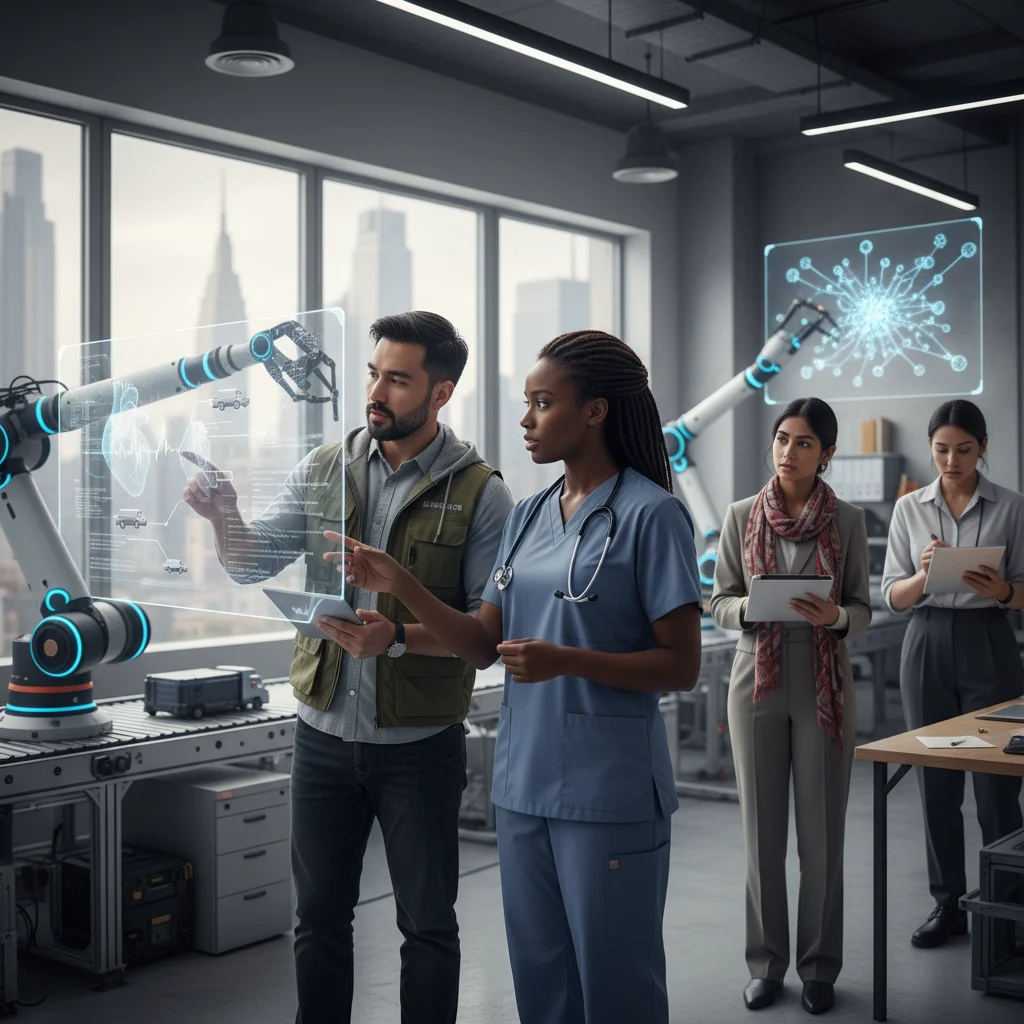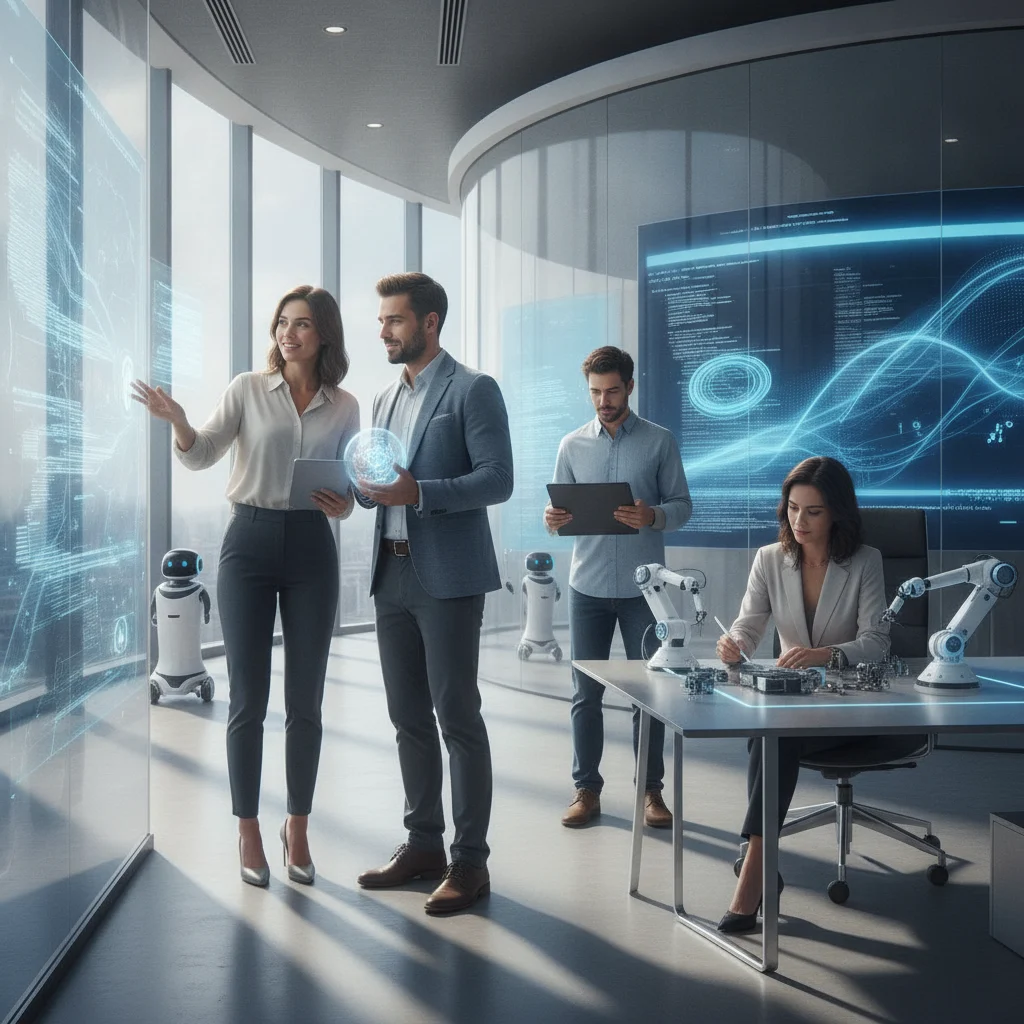
The global job market stands at a precipice, undergoing a seismic transformation driven by technological advancement and evolving economic paradigms. Traditional employment models are increasingly insufficient to address the rapid shifts, presenting both unprecedented opportunities and profound challenges. Understanding the nuances of this change, particularly concerning the future of work, is not merely advantageous but imperative for individuals, corporations, and policymakers alike.
The relentless march of automation and artificial intelligence (AI) is fundamentally reshaping job roles and demanding new competencies. This critical juncture requires a precise and direct analysis of current trends to formulate effective strategies for adaptation and prosperity in an increasingly automated world.
The Unrelenting Pace of Automation and AI
Automation and artificial intelligence are no longer abstract concepts; they are tangible forces actively redefining operational efficiency across industries. The World Economic Forum’s Future of Jobs Report 2023 indicates that 23% of jobs are expected to change in the next five years, with 69 million jobs created and 83 million eliminated. This represents a net decrease of 14 million jobs, or 2% of current employment.
This shift is not uniform; some sectors experience significant displacement, while others witness the emergence of entirely new job categories. The critical task is to understand these dynamics rather than simply reacting to them.
Redefining Productivity and Efficiency
AI-driven automation primarily targets repetitive, rule-based tasks, significantly boosting productivity and reducing operational costs. This leads to a reallocation of human effort towards more complex problem-solving, creative endeavors, and strategic decision-making. For instance, in manufacturing, robotic process automation (RPA) can perform assembly line tasks with greater speed and precision than human workers, leading to higher output rates.
However, this efficiency gain often comes at the cost of traditional roles. The McKinsey Global Institute estimates that automation could displace 400 million to 800 million individuals globally by 2030, necessitating a substantial portion to switch occupational categories. This underscores the urgency for robust reskilling initiatives.
Emerging Job Categories
While automation displaces certain jobs, it simultaneously creates new ones, often requiring advanced technical and analytical skills. Roles such as AI ethicists, robotics engineers, data scientists, machine learning specialists, and prompt engineers are rapidly gaining prominence. These positions did not exist in significant numbers a decade ago, illustrating the dynamic nature of the modern job market.
The Gartner Top Strategic Technology Trends for 2024 highlights AI engineering and sustainable technology as key drivers, indicating a continued demand for specialized skills in these areas. The net effect is a qualitative shift in labor demand, rather than a simple quantitative reduction.
The Widening Skills Gap: A Critical Analysis
The disparity between the skills possessed by the workforce and those demanded by employers constitutes a significant impediment to economic growth and individual career progression. This skills gap is not merely a shortage of technical expertise but also a deficiency in critical soft skills essential for navigating complex, collaborative environments.
Addressing this gap requires a multifaceted approach, encompassing educational reform, continuous professional development, and strategic investment in human capital. Proactive measures are essential to mitigate the economic and social consequences of a mismatched workforce.
Digital Literacy and Advanced Technical Skills
The foundational requirement for nearly every modern job is a high degree of digital literacy. Beyond basic computer operation, this includes proficiency in data analysis, cloud computing, cybersecurity awareness, and the ability to interact with AI tools. The OECD reports that approximately 1 in 4 adults in OECD countries lack basic digital skills. This deficit severely limits their access to emerging job opportunities.
Furthermore, advanced technical skills in areas like software development, data science, and AI/ML engineering are in critically short supply. Companies frequently report difficulty finding qualified candidates, leading to prolonged hiring processes and increased labor costs. This scarcity drives up wages for those with in-demand skills, while leaving a substantial portion of the workforce underemployed or unemployed.
Soft Skills: The Enduring Imperative
While technical skills are crucial, soft skills remain indispensable, particularly as AI handles more routine tasks. Critical thinking, problem-solving, creativity, emotional intelligence, communication, and adaptability are increasingly valued. These human-centric attributes are difficult for machines to replicate and are essential for collaboration, innovation, and leadership.
The World Economic Forum’s Future of Jobs Report 2023 identifies analytical thinking and creative thinking as the top two skills for workers in 2023, highlighting their growing importance. Investing in the development of these skills is paramount for individuals seeking to remain relevant and for organizations striving for competitive advantage.
Navigating the New Professional Paradigm: Strategies for Adaptation
The evolving job market necessitates a proactive and adaptive mindset. Individuals must embrace lifelong learning, while institutions and governments must facilitate accessible and relevant educational pathways. This collective effort is vital for ensuring a resilient and adaptable workforce capable of thriving amidst continuous disruption.
Mere reaction to change is insufficient; strategic foresight and deliberate action are required to shape a favorable professional future.
Lifelong Learning and Reskilling Initiatives
The concept of a static career path is largely obsolete. Individuals must commit to continuous learning, acquiring new skills and updating existing ones throughout their professional lives. Online learning platforms, micro-credentials, and vocational training programs offer flexible and accessible avenues for reskilling and upskilling. For example, platforms like Coursera and edX report millions of learners annually engaging in courses designed to meet industry demands.
Companies also bear responsibility for investing in their employees’ development. Internal training programs, tuition reimbursement, and dedicated learning days can significantly enhance workforce capabilities. A LinkedIn Learning Workplace Learning Report found that 94% of employees would stay at a company longer if it invested in their learning and development.
Government and Corporate Responsibilities
Governments play a crucial role in establishing supportive policies, funding education and training programs, and fostering collaboration between academia and industry. Initiatives like tax incentives for employer-provided training or publicly funded retraining programs can accelerate workforce adaptation. For example, Singapore’s SkillsFuture program offers citizens credits for skills development courses.
Corporations, beyond internal training, must actively engage with educational institutions to align curricula with industry needs. This collaboration can ensure that graduates possess the skills required by employers, thereby reducing the time and cost associated with onboarding and further training. Such partnerships foster a more responsive and relevant talent pipeline.
The Gig Economy’s Ambiguous Promise
The rise of the gig economy, characterized by temporary, flexible jobs often facilitated by digital platforms, presents a complex picture. While it offers unparalleled flexibility and access to diverse work opportunities for some, it also raises critical questions about worker protections, benefits, and long-term career stability. Approximately 16% of U.S. workers have earned money through gig platforms, indicating a significant, albeit often supplementary, part of the workforce.
A balanced perspective is essential to harness the benefits of flexibility without compromising worker welfare. The implications for social safety nets and labor regulations are profound and require careful consideration.
Flexibility Versus Security
For many, the gig economy provides autonomy and the ability to set one’s own hours, appealing to students, caregivers, or those seeking supplementary income. However, gig workers often lack traditional employee benefits such as health insurance, paid time off, and retirement plans. They are also vulnerable to income instability and have limited recourse in disputes with platforms.
The debate over classifying gig workers as independent contractors versus employees continues globally, with significant legal and economic ramifications. Policy frameworks must evolve to provide adequate protections for this growing segment of the workforce, ensuring fair compensation and access to essential benefits without stifling innovation.
Human-AI Collaboration: A Symbiotic Future?
The most pragmatic view of the future of work involves not a zero-sum game between humans and AI, but a symbiotic relationship. Instead of full automation, many tasks will see AI augmenting human capabilities, allowing individuals to focus on higher-value activities. This human-AI collaboration promises enhanced productivity and innovation.
For instance, AI can analyze vast datasets to identify patterns, while humans interpret those patterns to make strategic decisions. In healthcare, AI assists in diagnosing diseases from medical images, freeing doctors to concentrate on patient interaction and complex treatment plans. This synergy leverages the strengths of both entities, creating a more capable and efficient workforce.
Conclusion
The future of work is undeniably complex, marked by accelerated technological change, a persistent skills gap, and evolving employment models. A critical and precise understanding of these dynamics is paramount for effective navigation. The imperative is clear: individuals must commit to continuous learning, while governments and corporations must invest strategically in education, reskilling, and supportive policy frameworks.
By fostering adaptability, embracing human-AI collaboration, and addressing the challenges of the gig economy, societies can cultivate a resilient, innovative, and equitable workforce. The trajectory of the global job market is not predetermined; it is shaped by the proactive choices made today.