The global employment landscape is undergoing a profound, irreversible transformation. Far from a gradual evolution, we are witnessing a seismic shift driven primarily by advancements in artificial intelligence and automation, fundamentally reshaping the Future of Work. This is not merely a technological upgrade but a redefinition of human value in the labor market, demanding a critical examination of current trajectories and proactive strategies for adaptation. Ignoring these forces is no longer an option; understanding and responding to them is an economic imperative for individuals, corporations, and governments alike.
The Unavoidable March of Automation and AI in the Workplace
Historically, technological innovations have always disrupted labor markets, from the agricultural revolution to the industrial age. Each era introduced new efficiencies, rendering some roles obsolete while simultaneously creating others. The current wave, however, is distinct in its scope and speed, with AI demonstrating capabilities that extend beyond routine physical tasks to cognitive functions previously considered exclusively human.
Automation’s penetration is expanding rapidly across sectors. Manufacturing, logistics, and administrative support have long been targets, but AI is now making significant inroads into white-collar professions. For instance, the McKinsey Global Institute estimates that automation could displace a substantial number of workers globally, impacting sectors like customer service, data entry, and even aspects of finance and law. Specific tasks, such as invoice processing, data analysis, and content generation, are increasingly handled by algorithms, often with greater accuracy and speed than human counterparts.
The World Economic Forum’s Future of Jobs Report 2023 projects that 23% of jobs globally are expected to change in the next four years, with 69 million new jobs created and 83 million eliminated. This net reduction of 14 million jobs underscores the scale of displacement. The report specifically identifies roles like Bank Tellers, Data Entry Clerks, and Administrative Secretaries as facing significant decline due to automation and digitalization.
Shifting Skill Demands: The Emerging Talent Gap
As machines increasingly handle routine and predictable tasks, the demand for specific human-centric skills intensifies. The traditional emphasis on technical proficiency is being augmented, if not superseded, by a critical need for competencies that AI cannot easily replicate. This creates a significant and growing talent gap, where employers struggle to find candidates with the necessary adaptive capabilities.
The skills most rapidly increasing in demand include analytical thinking, creative thinking, resilience, flexibility, and agility. Furthermore, complex problem-solving, critical thinking, and social influence are consistently ranked among the top skills employers seek. These are not merely desirable traits; they are becoming fundamental requirements for navigating an unpredictable work environment. The WEF report indicates that 44% of workers’ core skills are expected to change by 2027.
Consequently, individuals whose professional value is tied to repetitive, rule-based operations face an urgent imperative to reskill and upskill. The ability to learn new technologies, adapt to evolving workflows, and engage in continuous professional development is no longer a career advantage but a baseline for sustained employability. Without this proactive adaptation, a significant portion of the workforce risks obsolescence.
New Job Paradigms: The Rise of Hybrid and Gig Economies
Beyond the direct impact of AI, the structure of employment itself is fragmenting and diversifying. The COVID-19 pandemic accelerated the adoption of remote and hybrid work models, fundamentally altering traditional office-centric employment. A Pew Research Center survey in 2022 revealed that 59% of workers whose jobs can be done remotely are working from home all or most of the time, a significant jump from 23% before the pandemic.
Simultaneously, the gig economy continues its exponential growth, offering flexibility but often at the expense of traditional benefits and job security. The global gig economy is projected to reach a market volume of $455 billion in 2023, according to Statista. This paradigm shift creates a dual challenge: for workers, it necessitates greater personal responsibility for benefits and career planning; for employers, it demands innovative approaches to talent management and engagement beyond the conventional full-time model.
The blend of traditional employment with flexible, project-based work is becoming increasingly common. This ‘hybrid’ workforce model requires robust digital infrastructure, clear communication protocols, and a re-evaluation of performance metrics. The critical analysis here reveals that while these models offer autonomy, they also exacerbate inequalities for those without access to digital tools or the skills required for self-managed work.
Navigating the Transition: Strategies for Workforce Adaptation
Effectively navigating this turbulent transition requires a multi-pronged approach involving individuals, educational institutions, corporations, and governments. Proactive measures are essential to mitigate job displacement and foster a resilient, adaptable workforce capable of thriving alongside advanced technologies.
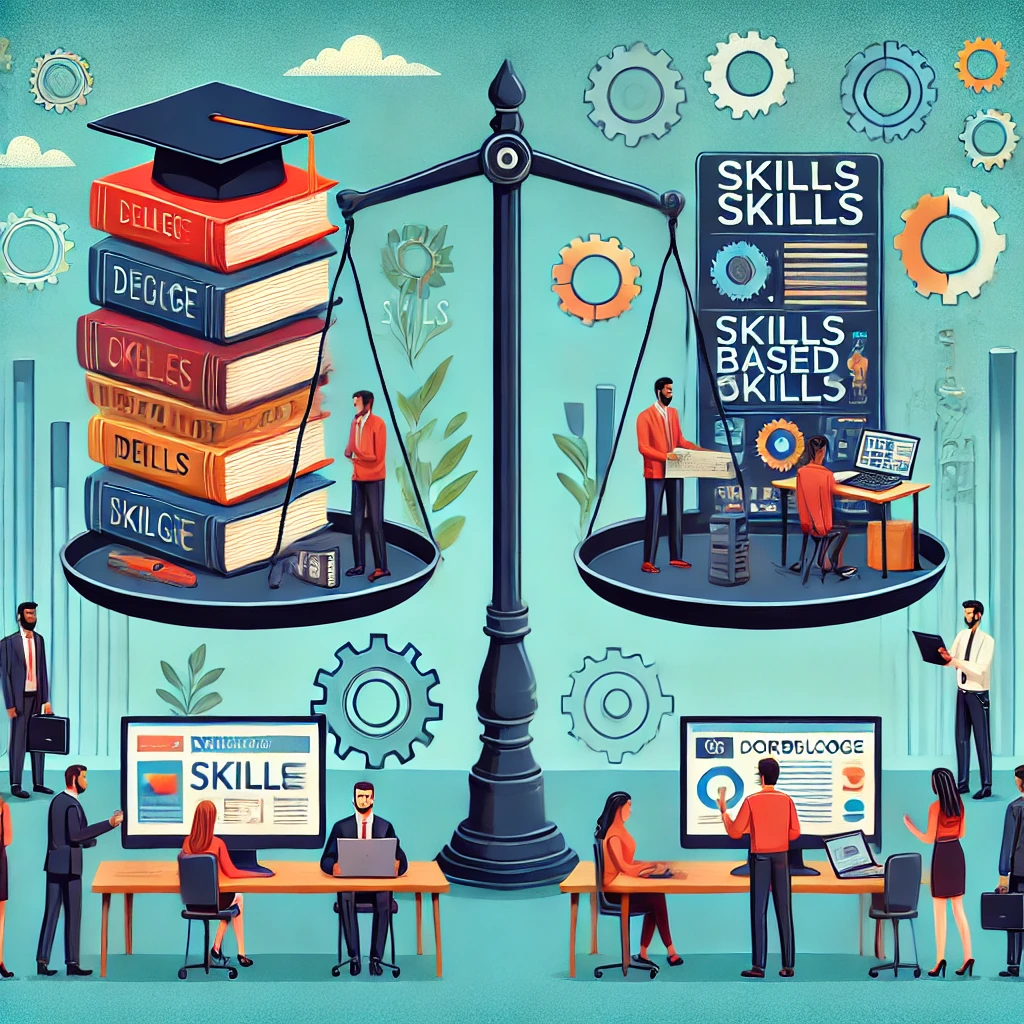
For individuals, investing in lifelong learning is paramount. This includes formal education, vocational training, and continuous online courses in areas like data science, AI literacy, cybersecurity, and advanced digital tools. Platforms like Coursera, edX, and LinkedIn Learning offer accessible avenues for skill acquisition. The emphasis must shift from static qualifications to dynamic capability development.
Corporations bear a significant responsibility for upskilling their existing workforce. Rather than solely focusing on external hiring, companies must invest in internal training programs that equip employees with the skills needed for future roles. This not only retains valuable institutional knowledge but also fosters employee loyalty and adaptability. Companies that fail to do so risk severe talent shortages and competitive disadvantages.
Governments must implement robust policies that support workforce transitions. This includes reforming educational curricula to emphasize future-ready skills, providing accessible reskilling initiatives, and establishing social safety nets that can buffer the impact of job displacement. Discussions around Universal Basic Income (UBI) and enhanced unemployment benefits reflect a growing recognition of the need for proactive social support in an increasingly automated economy.
Policy Imperatives and Ethical Considerations
The profound impact of AI on employment necessitates careful policy formulation and a strong ethical framework. Unchecked technological advancement without social safeguards risks exacerbating economic inequality and creating widespread social disruption. Governments must move beyond reactive measures to proactive governance that anticipates future challenges.
A primary imperative is to address potential job displacement through active labor market policies. This includes investment in public works, subsidies for companies that retrain workers, and robust career counseling services. Furthermore, policies must ensure equitable access to new opportunities, preventing a digital divide where only a select few benefit from technological progress. Initiatives to provide affordable broadband and digital literacy training are critical here.
Ethical considerations surrounding AI deployment in hiring and management are also crucial. Algorithms used in recruitment must be transparent, unbiased, and regularly audited to prevent discrimination. The use of AI for performance monitoring must balance productivity gains with employee privacy and well-being. The OECD Principles on AI provide a foundational framework for responsible stewardship of trustworthy AI, emphasizing inclusive growth, sustainable development, and human-centered values.
Conclusion: Proactive Adaptation is the Only Viable Path
The transformation of the global job market by AI and automation is not a distant threat but a present reality. While it promises unprecedented productivity gains and the creation of entirely new industries, it simultaneously presents formidable challenges related to job displacement, skill obsolescence, and economic inequality. A critical, analytical perspective reveals that passive observation is a recipe for societal disruption.
The future of work is not predetermined; it is being shaped by the decisions made today by individuals, businesses, and policymakers. Proactive investment in human capital, continuous adaptation to evolving skill demands, and the implementation of robust social and ethical frameworks are indispensable. Only through such deliberate and concerted efforts can we harness the revolutionary potential of AI to create a more prosperous and equitable future of work for all, rather than merely enduring its disruptive force.