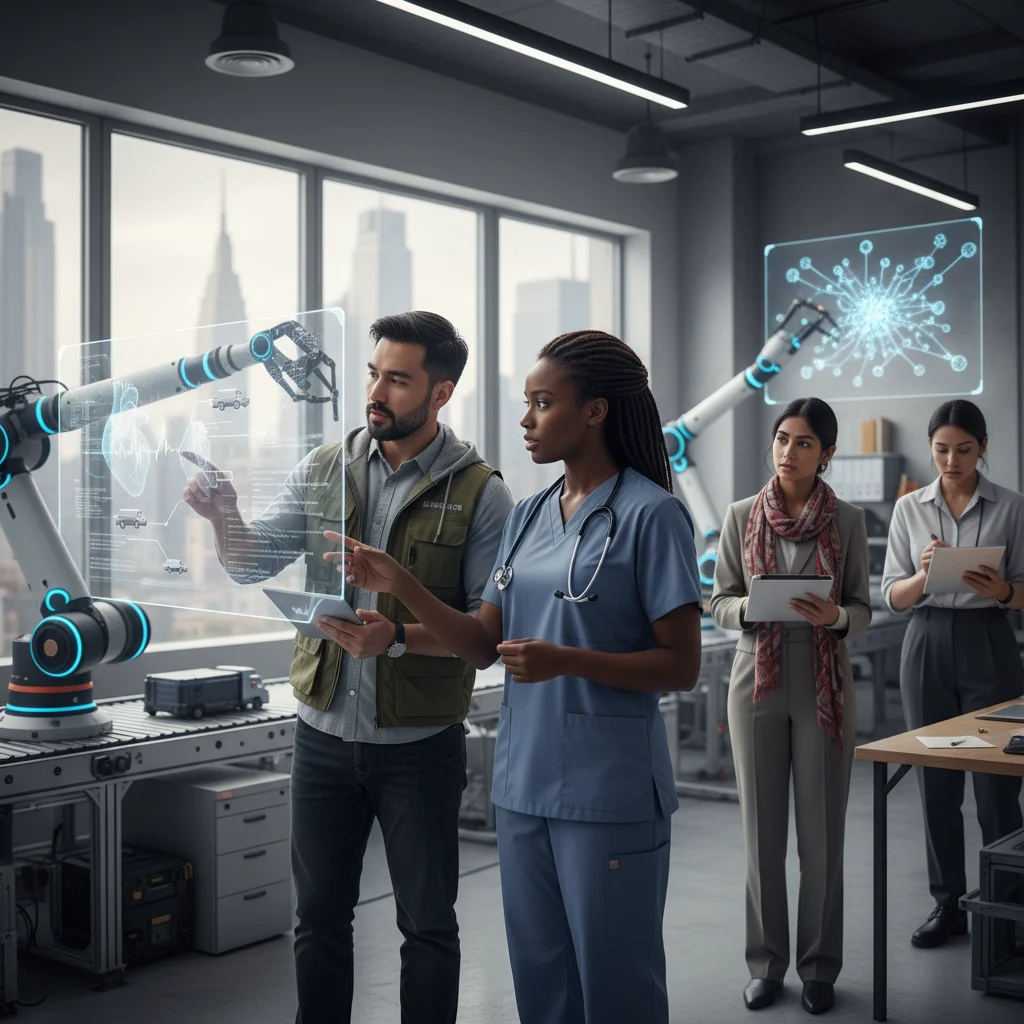
The global job market stands at an inflection point, facing unprecedented shifts driven by technological advancements and evolving economic paradigms. As industries grapple with the rapid integration of artificial intelligence (AI) and automation, the very definition of employment is being challenged. Understanding these profound transformations is crucial for individuals, educators, and policymakers alike to effectively navigate the complex terrain of the future of work.
This analysis critically examines the forces reshaping labor, from the displacement potential of intelligent systems to the rise of the gig economy, and proposes strategic imperatives for adaptation. The goal is not merely to observe but to dissect the mechanisms at play and offer precise insights into building a resilient and equitable workforce for tomorrow.
The Inexorable March of Automation and AI
The advent of automation and artificial intelligence has initiated a new industrial revolution, fundamentally altering the landscape of human labor. While historical technological advancements have often created more jobs than they destroyed, the current wave presents a distinct challenge due to the cognitive capabilities of modern AI systems. Repetitive, rule-based tasks across numerous sectors are increasingly susceptible to algorithmic execution.
The World Economic Forum’s Future of Jobs Report 2023 projects a significant upheaval, estimating that 69 million new jobs will be created, while 83 million will be eliminated, resulting in a net reduction of 14 million jobs (2% of current employment) in the next five years. This net displacement underscores the urgency of proactive adaptation strategies. Industries like administrative services and data processing are particularly vulnerable, experiencing substantial job losses.
Conversely, the same report highlights growth in roles such as AI and Machine Learning Specialists, Data Analysts, and Cybersecurity Experts, indicating a shift towards high-skill, technology-centric positions. McKinsey Global Institute’s 2023 report, Generative AI and the future of work in America, further suggests that generative AI could automate tasks representing 60 to 70 percent of employees’ time today, necessitating a fundamental rethinking of work processes rather than just job roles.
This dual impact of job destruction and creation demands a nuanced understanding. It is not merely about replacing human workers with machines, but about augmenting human capabilities, automating mundane tasks, and creating entirely new categories of work that require advanced cognitive and interpersonal skills.
Dissecting the Skill Gap: A Looming Crisis
A critical consequence of technological transformation is the widening skill gap, a significant mismatch between the competencies demanded by emerging roles and those possessed by the existing workforce. As jobs requiring routine physical and cognitive skills diminish, the demand for complex problem-solving, critical thinking, creativity, and digital literacy escalates. This disparity poses a substantial barrier to labor market fluidity and economic growth.
According to LinkedIn’s 2023 Workplace Learning Report, soft skills like communication, leadership, and adaptability are becoming increasingly vital, complementing the hard technical skills required for digital roles. Employers are struggling to find candidates who possess both the technical prowess to operate new systems and the human-centric skills to collaborate effectively and innovate.
The challenge extends beyond acquiring new technical skills; it involves cultivating a mindset of continuous learning and adaptability. Many traditional educational pathways fail to adequately prepare individuals for this dynamic environment, leaving a significant portion of the workforce unprepared for the demands of Industry 4.0. Addressing this gap requires systemic changes in education and corporate training.
Failure to close this skill gap risks exacerbating unemployment, particularly among mid-career professionals whose existing skill sets may become obsolete without intervention. Proactive investment in reskilling and upskilling initiatives is not merely beneficial but imperative for maintaining a competitive and inclusive workforce.
The Gig Economy: Flexibility or Precarity?
The rise of the gig economy represents another significant structural shift in the future of work, characterized by temporary, flexible jobs often facilitated by online platforms. Proponents highlight its benefits, including increased flexibility, autonomy, and supplementary income opportunities for workers. It also offers businesses access to a diverse talent pool on demand, reducing overheads.
However, a critical examination reveals substantial downsides, particularly concerning worker protections and economic stability. Gig workers frequently lack traditional employee benefits such as health insurance, paid leave, and retirement plans, leading to increased precarity. A 2021 Pew Research Center study found that 16% of U.S. adults have earned money through an online gig platform, yet many report inconsistent income and limited career progression.
The classification of gig workers as independent contractors rather than employees often exempts companies from providing standard labor protections. This model transfers significant risk from employers to individual workers, raising ethical questions about fair compensation and social safety nets. The fragmented nature of gig work can also hinder collective bargaining and advocacy efforts.
While the gig economy offers undeniable benefits in terms of market efficiency and individual choice, its unchecked expansion without robust regulatory frameworks risks creating a two-tiered labor market. This system could leave a substantial portion of the workforce vulnerable to economic instability and without adequate social protections, necessitating careful policy consideration.
Redefining Education for the Future Workforce
To effectively prepare for the evolving job market, a fundamental re-evaluation and restructuring of educational systems are indispensable. Traditional models, often focused on rote memorization and disciplinary silos, are increasingly ill-suited for a future demanding adaptability, interdisciplinary thinking, and continuous learning. The emphasis must shift from static knowledge acquisition to dynamic skill development.
Educational institutions, from primary schools to universities, must integrate digital literacy, computational thinking, and data analysis into core curricula. Beyond technical competencies, the cultivation of human-centric skills—such as creativity, emotional intelligence, complex problem-solving, and cross-cultural communication—is paramount. These are the skills less susceptible to automation and more critical for innovation and collaboration.
The concept of lifelong learning needs to transition from a theoretical ideal to a practical imperative. Governments and corporations must invest significantly in accessible, modular reskilling and upskilling programs that cater to adults already in the workforce. Micro-credentials, online learning platforms, and vocational training tailored to industry demands will play a crucial role in maintaining workforce relevance.
Furthermore, fostering a growth mindset among learners, one that embraces change and views challenges as opportunities for skill acquisition, is essential. Educational reforms must be agile, responsive to emerging industry trends, and collaborative, involving educators, employers, and policymakers to ensure alignment with future labor market needs.
Policy Imperatives for a Just Transition
Navigating the complex shifts in the future of work necessitates proactive and comprehensive policy interventions to ensure a just and equitable transition. Unregulated technological advancement risks exacerbating social inequalities and creating significant economic disruption. Governments have a critical role in mitigating adverse impacts and fostering an environment conducive to adaptation and growth.
Key policy areas include strengthening social safety nets, such as unemployment benefits and healthcare access, to provide a buffer for displaced workers. Exploring innovative models like universal basic income (UBI) or universal basic services warrants serious consideration as automation reduces the demand for traditional labor. These measures could provide a foundational level of economic security.
Investment in public education and vocational training programs, particularly those focused on digital and human-centric skills, is paramount. The OECD Employment Outlook consistently highlights the need for robust labor market policies that support active learning and career transitions. This includes subsidies for employer-provided training and incentives for individuals to pursue reskilling.
Furthermore, policymakers must address the regulatory challenges posed by the gig economy, ensuring fair labor practices, appropriate worker classification, and access to benefits. International cooperation is also vital, as the forces shaping the future of work transcend national borders. Coordinated efforts can establish best practices and prevent a race to the bottom in labor standards.
Conclusion
The future of work is not a predetermined outcome but a dynamic landscape shaped by technological innovation, economic forces, and deliberate human choices. While the transformative power of AI and automation presents formidable challenges, including job displacement and skill gaps, it also unlocks unprecedented opportunities for productivity, innovation, and new forms of employment. A critical, analytical approach reveals that passive observation is insufficient; proactive engagement is required.
To navigate this complex era successfully, a concerted effort from all stakeholders is essential. This includes educational institutions reimagining curricula, businesses investing in their human capital, and governments implementing forward-thinking policies that prioritize lifelong learning, social safety nets, and equitable labor practices. Only through such integrated strategies can we ensure that the future of work serves humanity’s collective progress, fostering resilience, adaptability, and shared prosperity rather than deepening existing divides.