For decades, a silent, pervasive myth permeated the corridors of our academies: the belief that the future belonged exclusively to the ethereal—to the coders, the data poets, and the architects of the cloud. The physical world, it was suggested, was a solved problem, a relic to be maintained by those who had somehow missed the digital bus. We were told the arc of progress moved only toward the screen. Yet, as we stand in 2026, the pendulum is swinging back with a violent, thunderous resonance. The grease-stained hands of the past have been replaced by the haptic precision of the present. This is the Resurgence of Skilled Trades (Blue-Collar 2.0), a cultural and economic pivot where the tactile meets the technological in a brilliant, sparks-flying synthesis.
The “New Collar” worker has arrived. They do not merely inhabit the world; they calibrate it. The dichotomy between the “brain” and the “hand” has collapsed into a singularity of specialized expertise. Today’s master technician is as comfortable with a terminal command as they are with a torque wrench. They are the guardians of the tangible infrastructure that sustains our digital hallucinations. Without the electrician, the server farm is a tomb. Without the HVAC specialist, the smart city is a fever dream. We are witnessing the apotheosis of the artisan.
The New Guilds: Blue-Collar 2.0 Apprenticeship Models
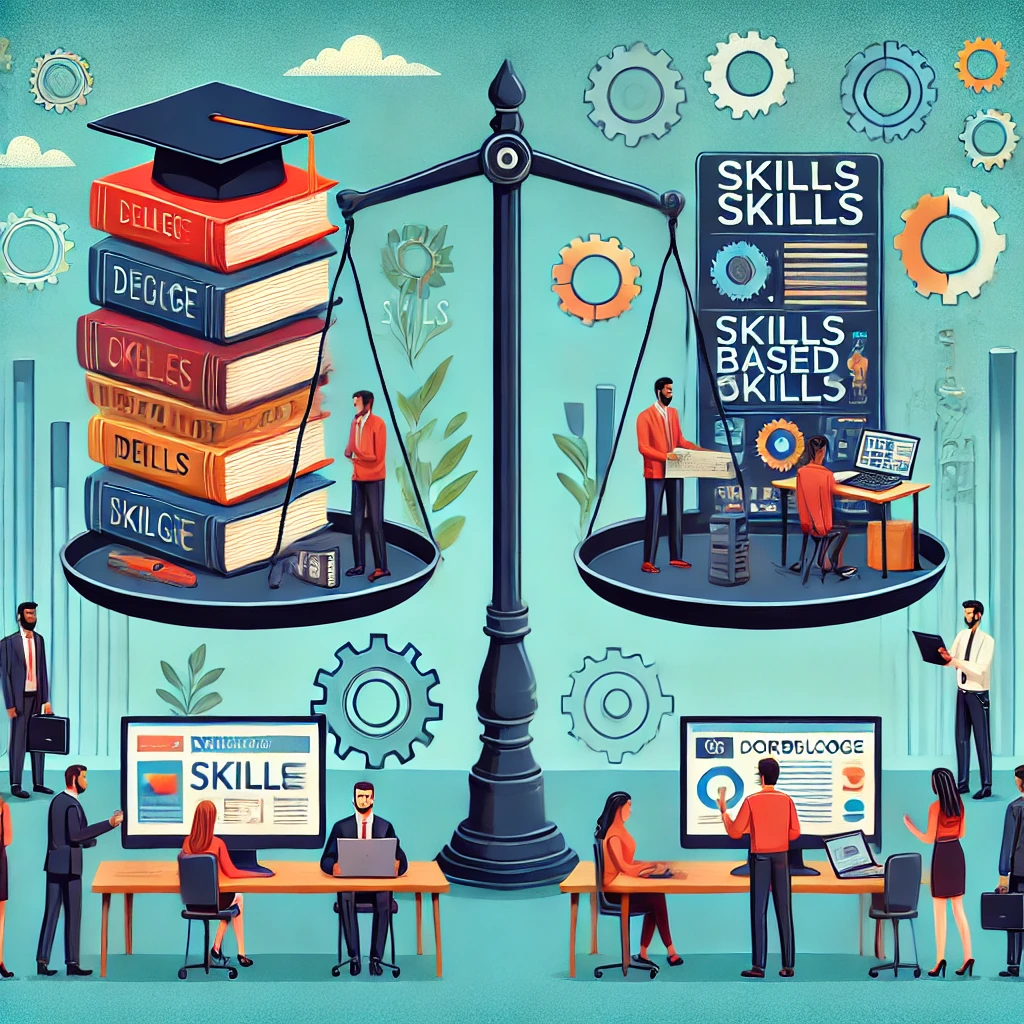
The ivory tower is showing cracks, and through those fissures, a new educational architecture is rising. The traditional four-year degree, once considered the only viable passport to the middle class, is being challenged by the pragmatism of Blue-Collar 2.0 Apprenticeship Models. This is not the dusty vocational training of the mid-20th century. It is a high-fidelity, hybridized system of “kinetic learning.”
In these modern guilds, the student is an initiate in a digital-physical sanctuary. They participate in a curriculum that is modular and stackable, earning credentials in advanced metallurgy alongside certifications in IoT networking. These programs are often co-designed by tech giants and industrial conglomerates, ensuring that the skills acquired are not just relevant, but surgical. The initiate spends the morning in a simulated environment—perhaps mastering the nuances of a high-pressure boiler system—and the afternoon on a live job site, mentored by a senior “Sovereign Technician.”
This model addresses the catastrophic “talent gap” by treating the student as an asset from day one. It recognizes that expertise in the 21st century is a living thing. The long sentence of a four-year hiatus from the workforce is being replaced by the punchy, iterative staccato of “work-study-apply.” This is a return to the master-apprentice lineage, but updated with the telemetry of the modern age. The apprentice is no longer just a “helper”; they are a data-collector, a junior analyst of the physical realm.
The X-Ray Visionary: Augmented Reality (AR) in Industrial Maintenance
Complexity has grown exponentially. The machines that power our world—massive turbines, delicate pharmaceutical processors, automated logistics grids—are now too intricate for the naked human eye to diagnose in isolation. To meet this challenge, the modern tradesperson has adopted a form of techno-enlightenment through Augmented Reality (AR) in Industrial Maintenance.
Imagine a technician standing before a sprawling, malfunctioning water filtration plant. To the unaugmented eye, it is a bewildering thicket of pipes and valves. But as they lower their AR visor, the world is illuminated with a digital “ghost” of the machinery. Real-time pressure gradients glow in neon blue; thermal anomalies pulse in warning red. The device overlays the original CAD blueprints directly onto the physical asset, revealing the hidden architecture beneath the steel skin.
This is the end of the “guesswork” era. AR allows for a collaborative troubleshooting process that transcends geography. A junior technician in a remote outpost can “tether” their vision to a master engineer halfway across the globe, who can then project 3D arrows and instructional prompts into the junior’s field of view. It is a pedagogical miracle. The barrier to entry for complex repairs is lowered, not by dumbing down the work, but by augmenting the worker. The technician becomes a cyborg of sorts, a fusion of human intuition and algorithmic precision.
The Oracle of the Asset: Predictive Diagnostics for Smart Infrastructure
The greatest shift in the trades is the move from the reactive to the proactive. We have entered the era of the “Sentient Building.” In this landscape, the role of the technician has evolved into that of a healer who treats the patient before the symptoms even appear. This is the domain of Predictive Diagnostics for Smart Infrastructure.
Modern buildings are no longer passive piles of brick and mortar; they are sensor-rich organisms. Every elevator, every pump, and every circuit breaker is constantly “breathing” data into the cloud. The Blue-Collar 2.0 professional monitors these biometrics. They are looking for the “vibrational signature” of a bearing that is 200 hours away from failure. They are analyzing the “harmonic distortion” in a power line that suggests an impending transformer surge.
This transition requires a profound literacy in data analytics. The plumber is now a fluid dynamics analyst. The electrician is a power-quality consultant. By utilizing Predictive Diagnostics for Smart Infrastructure, the modern trade firm offers “uptime as a service.” They do not wait for the catastrophic leak that floods the lobby; they replace the seal when the AI identifies a micro-fluctuation in pressure. It is a quiet, invisible victory of foresight over entropy. The city becomes a more stable, more resilient place, maintained by an army of digital oracles.
The Great Retrofit: Green-Collar Specialized Retrofitting
The climate crisis is the most significant “work order” in human history. To meet the goals of the energy transition, we cannot simply build new green cities; we must heal the old ones. This has given birth to a massive, decade-long project: Green-Collar Specialized Retrofitting. This is where the resurgence of the trades finds its moral and environmental purpose.
Our existing building stock is a sieve of wasted energy. Retrofitting these structures is a task of immense technical difficulty. It requires a new breed of “Green-Collar” workers who understand the holistic intersection of thermodynamics, material science, and renewable integration. It is about more than just installing solar panels; it is about the “deep energy” overhaul of a century-old apartment block. It is the delicate surgery of installing heat pumps into buildings designed for steam, or integrating EV charging infrastructure into parking garages that lack the electrical headroom.
The workers leading this charge are specialized artisans of the transition. They are the ones who translate abstract climate policy into the physical reality of a sealed building envelope or a microgrid. This is a high-stakes, high-reward sector. It is a labor-intensive endeavor that defies automation. You cannot send a robot into a crawlspace to insulate a Victorian-era pipe. You need a human. You need judgment. You need the grit and ingenuity of the Resurgence of Skilled Trades (Blue-Collar 2.0).
The Synthetic Partnership: Human-Machine Co-working (Cobotics) in Fabrication
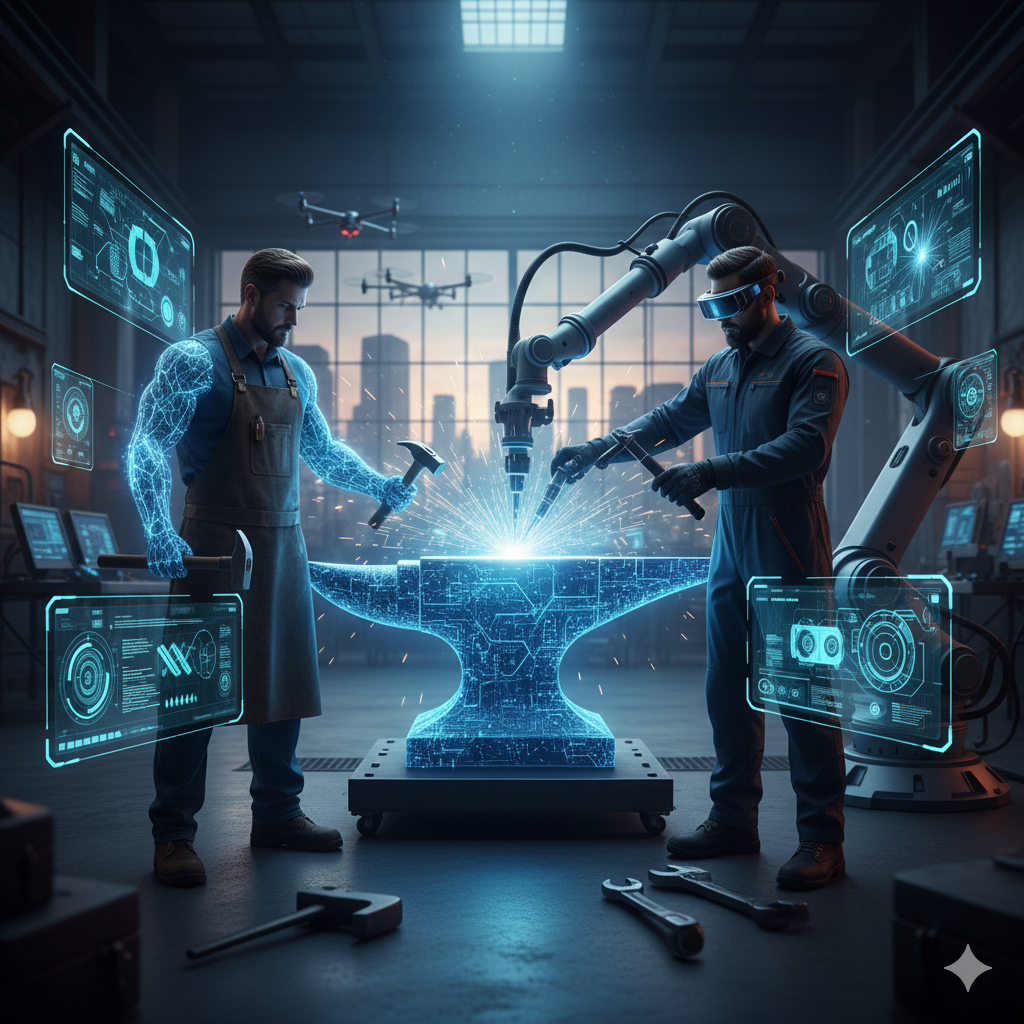
In the fabrication shops and construction sites of 2026, the fear of the “robotic takeover” has been replaced by the reality of the “robotic teammate.” We have entered the age of Human-Machine Co-working (Cobotics) in Fabrication. This is the ultimate synergy: the tireless strength of the machine paired with the creative adaptability of the human mind.
A cobot (collaborative robot) is not tucked away behind a safety cage; it stands shoulder-to-shoulder with the welder or the carpenter. While the cobot performs the repetitive, ergonomically punishing tasks—such as holding a heavy steel beam in place or performing a thousand identical tack-welds—the human worker focuses on the “non-linear” aspects of the job. They manage the edge cases. They adjust for the subtle imperfections in the raw materials. They provide the final, aesthetic flourish that a machine cannot understand.
This partnership is redefining the physical limits of the worker. Exoskeletons and cobotic arms have effectively “de-aged” the trades. A master mason can now continue their craft into their 60s because the machine takes the strain off their joints. The trade becomes more inclusive, opening the door for individuals who may have previously lacked the raw physical power for heavy industry but possess the intellectual rigor required for its modern iteration. It is a democratization of the forge.
The Rebirth of the “Maker” Class
The cultural repercussions of this shift are profound. We are seeing the death of the “starving artist” and the “unskilled laborer,” replaced by the “Prosperous Maker.” In a world where AI can generate a thousand digital logos or write a million lines of generic code in a heartbeat, the ability to actually build something that stands in the physical world has become the ultimate luxury.
The Resurgence of Skilled Trades (Blue-Collar 2.0) is more than just a labor trend; it is a restoration of dignity. It is a recognition that the work of the hands, when guided by a sophisticated mind, is one of the highest forms of human expression. The “New Collar” worker is the architect of our comfort, the steward of our safety, and the essential engineer of our survival.
As we look toward the horizon of the late 2020s, the path is clear. We must continue to invest in Blue-Collar 2.0 Apprenticeship Models to seed the next generation of masters. We must embrace Augmented Reality (AR) in Industrial Maintenance to solve the unsolvable. We must trust in Predictive Diagnostics for Smart Infrastructure to keep our cities breathing. We must commit to Green-Collar Specialized Retrofitting to save our home. And we must perfect Human-Machine Co-working (Cobotics) in Fabrication to extend our reach.
The forge is hot. The tools are ready. The physical world is waiting to be shaped once again. It is a beautiful time to be a builder.