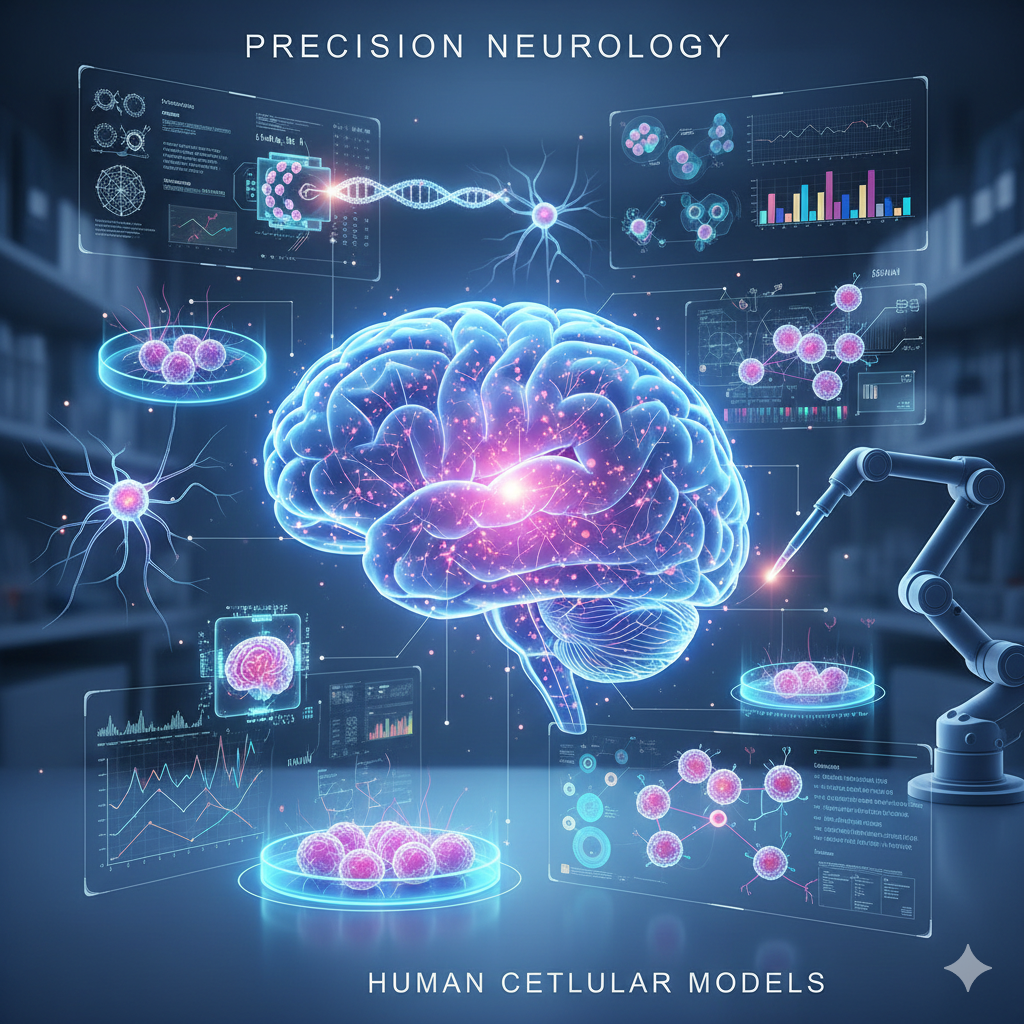
The human brain, that enigmatic three-pound universe, has long remained the most formidable frontier in medicine. For centuries, its pathologies—the insidious creep of Alzheimer’s, the tremors of Parkinson’s, the silent ravages of ALS—have defied comprehensive understanding, let alone cure. We have navigated its labyrinthine complexities with blunt instruments, often relying on animal models that, while instructive, frequently fell short of replicating the nuanced pathology of the human cerebrum. But a new era has dawned. We are no longer simply observing; we are engineering, cultivating, and digitally mirroring the very essence of neurological disease. This is the age of Precision Neurology and Human Cellular Models, a transformative epoch where the mind’s secrets are finally yielding to a symphony of biological ingenuity and computational prowess.
The journey to this precipice has been arduous. Early neurological research, a meticulous yet often frustrated endeavor, grappled with the inherent limitations of ex vivo and in vivo studies that could never truly capture the idiosyncratic cellular landscape of a human patient. The chasm between preclinical success in a murine model and clinical efficacy in a human trial was, more often than not, a vast, unbridgeable canyon. This translational bottleneck became the Gordian knot of neuroscience.
Today, however, that knot is being meticulously untangled by a confluence of biotechnological marvels. We are moving beyond the era of broad-stroke therapeutics, evolving towards a granular, patient-specific understanding of neurological dysfunction. This isn’t merely about finding new drugs; it’s about finding the right drugs, for the right patient, at the right time. This bespoke approach to neurological medicine is powered by the profound insights gleaned from culturing human neural tissue in unprecedented ways, then interrogating it with the incisive intellect of artificial intelligence.
The Silicon-Biological Symphony: Patient-Derived Organoid Intelligence
Imagine holding a miniature, living replica of a human brain in your palm, derived not from a cadaver, but from a single skin cell of a living patient. This is not science fiction; it is the breathtaking reality of patient-derived organoid intelligence. These are not mere clumps of cells; they are complex, self-organizing three-dimensional structures, meticulously coaxed from induced pluripotent stem cells (iPSCs) to recapitulate the intricate cellular architecture of the human cortex. They pulsate with electrochemical activity, forming nascent neural networks that mirror the very patient from whom they originated.
The journey begins with a somatic cell, perhaps a fibroblast, meticulously reprogrammed to regress into an iPSC—a cellular tabula rasa capable of differentiating into any cell type. With a carefully orchestrated sequence of growth factors and extracellular matrix scaffolds, these iPSCs are guided along a developmental pathway, recapitulating aspects of embryonic neurogenesis. The result is a cortical organoid, a spheroidal microcosm exhibiting astonishing fidelity to human brain development, complete with distinct neuronal and glial populations. These tiny cerebellums, hippocampi, and cortical regions are not mere approximations; they are biological surrogates, offering an unprecedented window into disease mechanisms.
What truly elevates these organoids to the realm of “intelligence” is their profound integration with advanced computational systems. In 2026, patient-derived organoid intelligence is characterized by the seamless interfacing of these biological entities with high-density microelectrode arrays (MEAs) and sophisticated electrophysiological recording platforms. These MEAs act as a digital stethoscope, listening intently to the nuanced “neural chatter” of the organoid—the complex patterns of excitation and inhibition that define its functional state. Machine learning algorithms then interpret these electrical signatures, discerning subtle anomalies that might herald the onset of a neurodegenerative process or indicate a particular drug’s efficacy.
Consider a patient diagnosed with a rare, aggressive form of frontotemporal dementia. A brain organoid derived from their iPSCs can be cultured, providing a living, functional avatar of their disease. Researchers can then screen hundreds of potential therapeutic compounds on this organoid, observing in real-time how its neural networks respond. Does a particular compound reduce pathological protein aggregation? Does it restore aberrant firing patterns? The AI, analyzing terabytes of electrophysiological and imaging data, can pinpoint the most promising candidates with unprecedented speed and precision. This iterative, bio-computational feedback loop dramatically accelerates drug discovery, allowing for personalized therapeutic stratification that was once unimaginable. The organoid becomes a living, predictive canvas, painting a picture of future efficacy.
The Microphysiological Mimicry: Microphysiological Systems (MPS) for BBB
One of the most formidable bastions in the fight against neurological disease is the blood-brain barrier (BBB). This highly selective physiological “gatekeeper” protects the brain from circulating toxins and pathogens, but it also frustrates the delivery of the vast majority of therapeutic compounds. For decades, drug developers have grappled with this impermeability, with countless promising neuro-therapeutics failing simply because they could not penetrate this biological shield. In 2026, this impasse is being systematically dismantled by Microphysiological Systems (MPS) for BBB, often colloquially termed “brain-on-a-chip” models.
These MPS are exquisite feats of micro-engineering, designed to replicate the intricate cellular and anatomical features of the human BBB in a tiny, in vitro environment. Utilizing microfluidic channels, porous membranes, and co-culture techniques, these chips precisely mimic the tight junctions between endothelial cells, the pericytes, and the astrocytic end-feet that collectively form the functional BBB. The dynamic flow rates within these microchannels simulate physiological blood flow, adding another layer of authenticity to the model.
The profound utility of Microphysiological Systems (MPS) for BBB lies in their ability to accurately predict drug permeation before embarking on costly and often futile animal or human trials. A new therapeutic candidate, designed to target a specific receptor in the brain, can be introduced into the “blood” side of the chip. Researchers can then meticulously quantify its ability to traverse the endothelial layer and reach the “brain” side, measuring its concentration in real-time. This provides invaluable pharmacokinetic and pharmacodynamic data, informing lead compound optimization and greatly de-risking the drug development pipeline. The chips are miniature sentinels, testing the gates of entry.
Beyond simple permeability, these MPS platforms can also model BBB dysfunction, which is a hallmark of many neurological diseases, including stroke, multiple sclerosis, and various neuroinflammatory conditions. By introducing inflammatory cytokines or hypoxic conditions, researchers can observe how the BBB integrity is compromised and then test compounds aimed at restoring its barrier function. This dynamic modeling capability positions MPS as an indispensable tool for developing targeted therapies that not only penetrate the BBB but also actively repair it, opening new avenues for neurological intervention.
The Semantic Snapshot: iPSC-Derived Neuro-Phenotyping
The power of Precision Neurology hinges on its granularity—the ability to discern subtle, patient-specific variations in disease presentation. This meticulous characterization, at the cellular and molecular level, is achieved through iPSC-derived neuro-phenotyping. This process is a deep dive into the functional and morphological “personality” of neurons derived from a single individual, revealing the unique signature of their neurological condition.
Once iPSCs are generated from a patient, they are differentiated into relevant neural cell types—perhaps dopaminergic neurons for Parkinson’s research, motor neurons for ALS, or cortical neurons for autism spectrum disorders. These patient-specific neurons are then subjected to a battery of sophisticated assays. Neuro-phenotyping involves a panoramic assessment, encompassing detailed morphological analysis (dendritic arborization, axonal length, nuclear morphology), functional assessment (calcium imaging to measure neuronal activity, electrophysiological recordings to assess excitability and synaptic transmission), and biochemical profiling (protein aggregation, mitochondrial dysfunction, neurotransmitter release).
The integration of high-content imaging and automated analysis platforms allows for a systematic and unbiased comparison of diseased neurons versus healthy controls, or neurons from different patients with the same clinical diagnosis but varying genetic backgrounds. For instance, in Parkinson’s disease, iPSC-derived dopaminergic neurons from one patient might exhibit profound mitochondrial fragmentation and oxidative stress, while those from another patient with a different genetic mutation might show preferential alpha-synuclein aggregation and impaired lysosomal function. These subtle, patient-specific neuro-phenotypes are critical. They explain why one patient responds well to a particular therapy while another does not.
This granular insight allows for the stratification of patient populations, leading to more targeted clinical trials and truly personalized treatment paradigms. Instead of a one-size-fits-all approach, therapies can be tailored to address the precise molecular and cellular dysfunctions identified through iPSC-derived neuro-phenotyping. This is not merely diagnostics; it is prognostic power, enabling a future where treatment pathways are as unique as the individuals they serve. The cells whisper their secrets, and we listen intently.
The Algorithmic Oracle: Digital Twins of the Human Neuron
As the volume and complexity of data generated by Human Cellular Models proliferate, the need for intelligent computational frameworks becomes paramount. Enter digital twins of the human neuron: high-fidelity, dynamic computational models that serve as virtual replicas of a patient’s neural circuitry, allowing for predictive simulation and in silico experimentation. These are not static blueprints but living, breathing algorithms that evolve with incoming data.
A digital twin of the human neuron is constructed by integrating a vast array of patient-specific data. This includes genetic sequencing, detailed electrophysiological recordings from patient-derived organoid intelligence, protein expression profiles (proteomics), metabolic data (metabolomics), and even advanced neuroimaging from the patient’s actual brain. Machine learning algorithms, particularly deep learning architectures, are then employed to fuse this disparate information, creating a sophisticated computational model that accurately recapitulates the biological behaviors and pathological trajectories of that individual’s neurons.
The predictive power of these digital twins is transformative. Researchers can pose “what if” scenarios without ever touching a biological sample or administering a drug to a patient. For example, a digital twin can simulate the long-term effects of a specific neuro-inflammatory cytokine on synaptic plasticity, or predict how a novel gene therapy vector might alter neuronal excitability over a period of years. This allows for rapid hypothesis testing, identification of optimal drug dosages, and prediction of potential off-target effects, all within a virtual environment. The digital twin becomes an algorithmic oracle, forecasting the future of a patient’s neurological health.
Furthermore, digital twins of the human neuron are dynamic entities, continually learning and refining their predictions as new clinical and experimental data become available. As a patient progresses through a clinical trial, their evolving biomarkers and physiological responses can be fed back into their digital twin, updating its parameters and improving its predictive accuracy. This creates a powerful feedback loop between the biological and the computational, accelerating the iterative process of personalized medicine. The twin is an echo, ever adapting to its origin.
The Unseen Atlas: Multi-Omic Neural Mapping
To truly comprehend the intricate tapestry of neurological disease, we must move beyond single-layer analysis. The brain’s complexity demands a holistic perspective, an atlas stitched together from every available biological dimension. This is the essence of multi-omic neural mapping: a comprehensive, integrated analysis of an individual’s genome, epigenome, transcriptome, proteome, and metabolome, specifically within the context of their neural cells. It’s about understanding every ‘omic’ layer that contributes to a neuron’s identity and function.
The sheer volume of data generated by multi-omic neural mapping is staggering. Genomics reveals the underlying genetic predispositions. Epigenomics uncovers how genes are turned on or off without altering the DNA sequence itself. Transcriptomics details which genes are actively being expressed as RNA. Proteomics quantifies the proteins—the true workhorses of the cell—and their modifications. Metabolomics identifies the small molecules involved in cellular metabolism. Each “omic” provides a unique lens, but their true power lies in their synergistic interpretation.
For example, in a patient with a genetic predisposition to Alzheimer’s, multi-omic neural mapping might reveal not only the presence of specific risk alleles but also an altered epigenetic landscape that primes certain genes for overexpression, a unique transcriptional signature indicating chronic inflammation, a proteomic profile rich in aggregated amyloid-beta and tau proteins, and a metabolomic fingerprint indicative of impaired energy metabolism within their neurons. This integrated view paints a far richer and more actionable picture than any single ‘omic’ layer could provide.
The challenge, and the triumph, of multi-omic neural mapping lies in its sophisticated data integration and analysis. Advanced bioinformatics tools, leveraging machine learning and network analysis, are essential to identify key pathways, driver genes, and therapeutic targets from this enormous dataset. This allows researchers to move beyond mere correlation, uncovering causative links and illuminating the complex interplay between genetic susceptibility, environmental factors, and cellular dysfunction. This comprehensive atlas is the ultimate roadmap for navigating the labyrinth of neurological disease, revealing targets that were previously invisible.
The Future Unveiled: A New Paradigm of Hope
The confluence of Precision Neurology and Human Cellular Models represents a fundamental paradigm shift in our approach to brain diseases. We are moving from a reactive, symptomatic treatment model to a proactive, predictive, and personalized therapeutic strategy. The days of treating all patients with a given diagnosis uniformly are rapidly receding, replaced by an era where each individual’s unique biology dictates their path to healing.
This integrated approach, leveraging patient-derived organoid intelligence, dissecting the BBB with Microphysiological Systems (MPS) for BBB, defining disease with granular iPSC-derived neuro-phenotyping, forecasting with digital twins of the human neuron, and comprehensively mapping pathology with multi-omic neural mapping, is not just advancing scientific understanding; it is rekindling hope. For the millions afflicted by neurological disorders, this convergence offers the promise of therapies that are not just more effective, but truly transformative. The human brain, once an impenetrable enigma, is now yielding its profound secrets, guided by the precision of science and the power of human ingenuity. The mind’s crucible is alight, forging a future where neurological disease is understood, confronted, and ultimately, overcome.